Curious how a 200-question paper in just two hours can be tamed without panic? If you are preparing for a primary teacher post, this guide will put you on a clear path.
You’ll get a friendly walkthrough of the full structure: a 200-mark objective paper, split between Section A fundamentals and Section B teaching core, with a 0.25 mark penalty for wrong answers. Knowing this helps you balance speed with accuracy from day one.
All Details
Section A covers General Awareness, Reasoning, Numerical Ability, English and Hindi — each area carries 20 questions. Section B contains 100 questions on subject-specific teaching methodology and classroom practice, including child development and NEP and RTE topics.
By the end of this article, you will know exactly which topics to prioritise, how negative marking shapes attempt strategy, and how to turn the syllabus into a practical daily study plan. Read on to convert uncertainty into confident preparation.

1. DSSSB PRT Syllabus 2025: Overview
You face a 200-question objective paper that tests both core basics and classroom-ready methods. In two hours, you must answer 200 MCQs for 200 marks, with a 0.25 penalty for wrong answers — so pacing and choice matter.
What the role demands and how the syllabus reflects it
The role focuses on foundational teaching, classroom readiness and child-centred practice. Section A builds your basics across five pillars: general awareness, general intelligence reasoning, arithmetical numerical ability, English language and Hindi language.
Key takeaways at a glance
Sections: two parts — a 100-question Section A (five 20-mark parts) and a 100-question Section B.
Marks and time: 200 marks in 120 minutes; plan minutes per question to avoid rushed errors.
Questions vary from fact-based general awareness to applied teaching methodology in Section B.
"Balance speed with accuracy: strengthen reasoning ability and numerical ability early, then deepen teaching-method depth."
2. DSSSB PRT Syllabus 2025: Exam Pattern and Marking Scheme
Understanding the structure helps you convert effort into marks. A clear two-part arrangement governs the test: a speed-focused Section A followed by a deeper Section B. You get 200 objective questions for 200 marks in 120 minutes.
Paper structure at a glance
Section A has five components — general awareness, general intelligence reasoning, arithmetical numerical ability, English language and comprehension, and Hindi language and comprehension. Each part carries 20 questions worth 20 marks.
Section B is the 100-question teaching-methodology block. It carries 100 marks and demands depth and application.
Question distribution, marks, duration and mode
Part | Questions | Marks |
Section A (five parts) | 100 | 100 |
Section B (methodology) | 100 | 100 |
Negative marking and attempt strategy
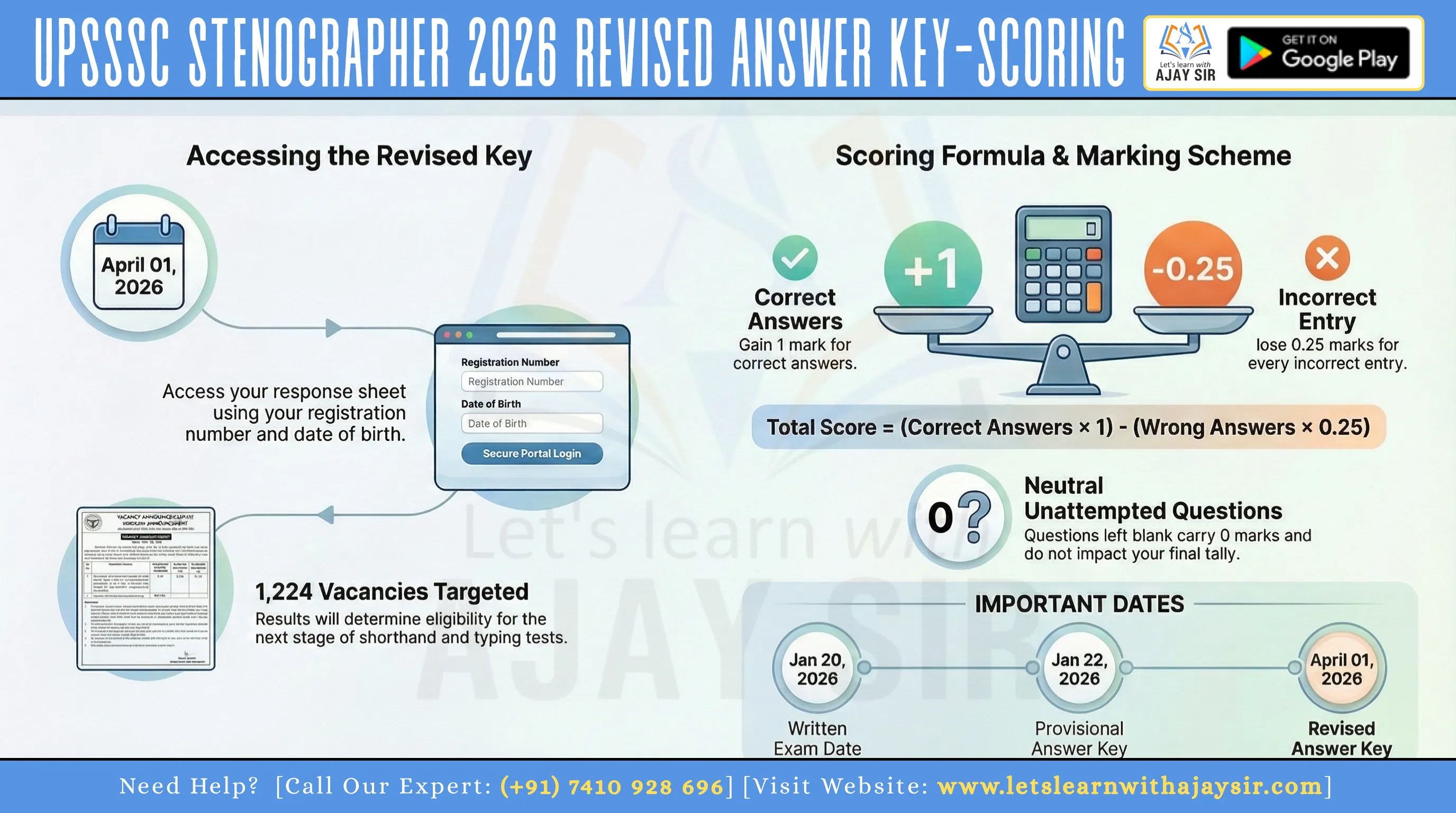
Each correct answer gives one mark. For each wrong answer, the paper deducts 0.25 mark. That small penalty changes guesswork into calculated risk.
Attempt high-confidence questions first — pick easy GA, reasoning ability and numerical ability items early.
Reserve about 55–60 minutes for Section A, then use the remaining time for Section B.
Use conservative guessing where you can eliminate options; skip low-certainty items to protect net marks.
3. DSSSB PRT Syllabus 2025
This concise topic map tells you what to cover and how to split practice time.
General Awareness
Cover current events, national institutions, history, polity and the constitution. Add everyday science, art & culture, geography and sports. Use observation cues from the daily news to retain facts.
General Intelligence & Reasoning Ability
Practice analogies, classification, series and spatial visualisation. Drill arithmetical number series and pattern puzzles to boost speed and accuracy.
Arithmetical & Numerical Ability
Focus on percentages, ratios and proportion, simple & compound interest, mensuration and DI. Build formula fluency, then solve tables and graphs under time limits.
English and Hindi language comprehension
For the English language, revise grammar, sentence structure, vocabulary and comprehension daily.
For hindi language, practise व्याकरण, वाक्य रचना, समास, सन्धि and मुहावरे. Error-spotting lifts your score quickly.
Teaching Methodology
Map learning theories to classroom tasks. Relate NEP and RTE policies to inclusive practice, child development and curriculum design for primary teacher roles.
Subject | Key topics | Study focus |
General Awareness | Current events, constitution, science | Daily reading + weekly revision |
Reasoning | Analogies, series, spatial | Timed pattern drills |
Numerical | Percentages, CI-SI, DI | Formula practice + mock DI |
Methodology | Learning theories, inclusion, and curriculum | Link theory to classroom examples |
4. DSSSB PRT Syllabus 2025: Weightage, Time management
Get a simple plan you can repeat under pressure. The paper splits into two clear parts: five 20-mark pockets and one 100-mark methodology block. You must manage 120 minutes while guarding against a 0.25 penalty for wrong answers.
Balancing Section A speed with Section B depth
Prioritise Section A for quick, low-hanging marks. Aim to finish the five 20-mark parts first to build momentum.
Keep Teaching Methodology central to your study; it carries half the marks and needs depth more than speed.
Allotting minutes per section to maximise accuracy
Start with a baseline split: about 55–60 minutes for Section A and 60–65 minutes for Section B. Refine this split with mock practice.
Cap items in GA, reasoning ability and numerical ability at about 40–45 seconds each.
Allow slightly more time for comprehension passages and tricky pedagogy questions.
Use a three-bucket system — sure-shot, probable and doubtful — to control guessing and limit penalty losses.
Keep a final 6–8 minute buffer for grid checks and revisiting flagged items.
"Attempt high-certainty questions first; mark the rest for a second pass to protect net marks."
Track time spent per block during mocks and adjust attempts by strength. With a calm, repeatable routine, you will make the actual exam mirror your best practice runs.
5. Resources, study plan and syllabus PDF
Build a compact resource kit to keep your preparation focused and measurable. Start with authentic materials and a repeatable weekly loop so every practice session has a purpose.
Leveraging previous year papers, mock tests and chapter tests
Gather three core resources: earlier papers, full-length mocks and chapter tests mapped to each subject.
Use previous year papers to learn question style and common traps.
Run chapter tests to close gaps in numerical ability, language comprehension and teaching methodology.
Keep an error log of stems, traps and the fix for quick revision before mocks.
Archive the official syllabus PDF when released and map every activity to the listed topics.
Two-hour paper simulation plan for real-world pacing
Practice full papers weekly to rehearse transitions, stamina and net scoring with negative marking.
Simulate 200 questions in 120 minutes: 100 marks Section A (five parts) and 100 marks Section B.
Follow a 6-day study loop with one full simulation day; use post-mock analysis to tag weak topics.
Allocate roughly 55–60 minutes to Section A and 60–65 minutes to Section B; leave the last 10 minutes for answer-grid checks.
Convert mock insights into next week’s micro-plan and keep one-pagers for rapid pre-exam review.
Tip: Weekly full simulations plus disciplined chapter work will raise accuracy, pacing and final marks.
Conclusion
A steady cycle of practice, mock tests and analysis will make the exam familiar, not frightening.
You now have a precise, actionable view of the dsssb prt course and what to cover. Plan daily tasks from topics, balance Section A speed with Section B depth, and protect marks through smart attempts.
Follow a weekly loop: practise, simulate, analyse and refine. Use notes, past papers and an error log to fix gaps in awareness, reasoning and subject fundamentals. Stay consistent and link theory to classroom examples so you become a confident primary teacher by exam day.
Approach the prt exam as candidates with clarity, discipline and a repeatable plan that converts study into performance.


![EMRS PGT [Tier-2] ENGLISH - 2025](https://letslearnwithajaysir.s3.ap-south-1.amazonaws.com/courses/FsnKxIFpiLxbRD418g6vo7AsLy0ge7IP7Iu2fsJY.webp)
![EMRS TGT [Tier-2] ENGLISH - 2025](https://letslearnwithajaysir.s3.ap-south-1.amazonaws.com/courses/BjLXVqVV1SeZKnhYjmPZpz2jQ7r02kS73pGGOLrL.webp)
![KVS/NVS PGT ENGLISH [Tier-2] - 2025](https://letslearnwithajaysir.s3.ap-south-1.amazonaws.com/courses/vqli598KWrKnm4txcsZh5qjMN9UMAX8LvFk9IiF0.webp)
![KVS/NVS TGT ENGLISH [Tier-2] - 2025](https://letslearnwithajaysir.s3.ap-south-1.amazonaws.com/courses/pxC2WhfYKuyaoGqvcTvhTBL2Y44o3TNA0z8NYRB5.webp)