You may feel the weight of preparation on your shoulders right now. Many candidates I know began with the same mix of hope and worry. This guide will give you a clear snapshot of what changed and how the recruitment process works so you can plan from day one.
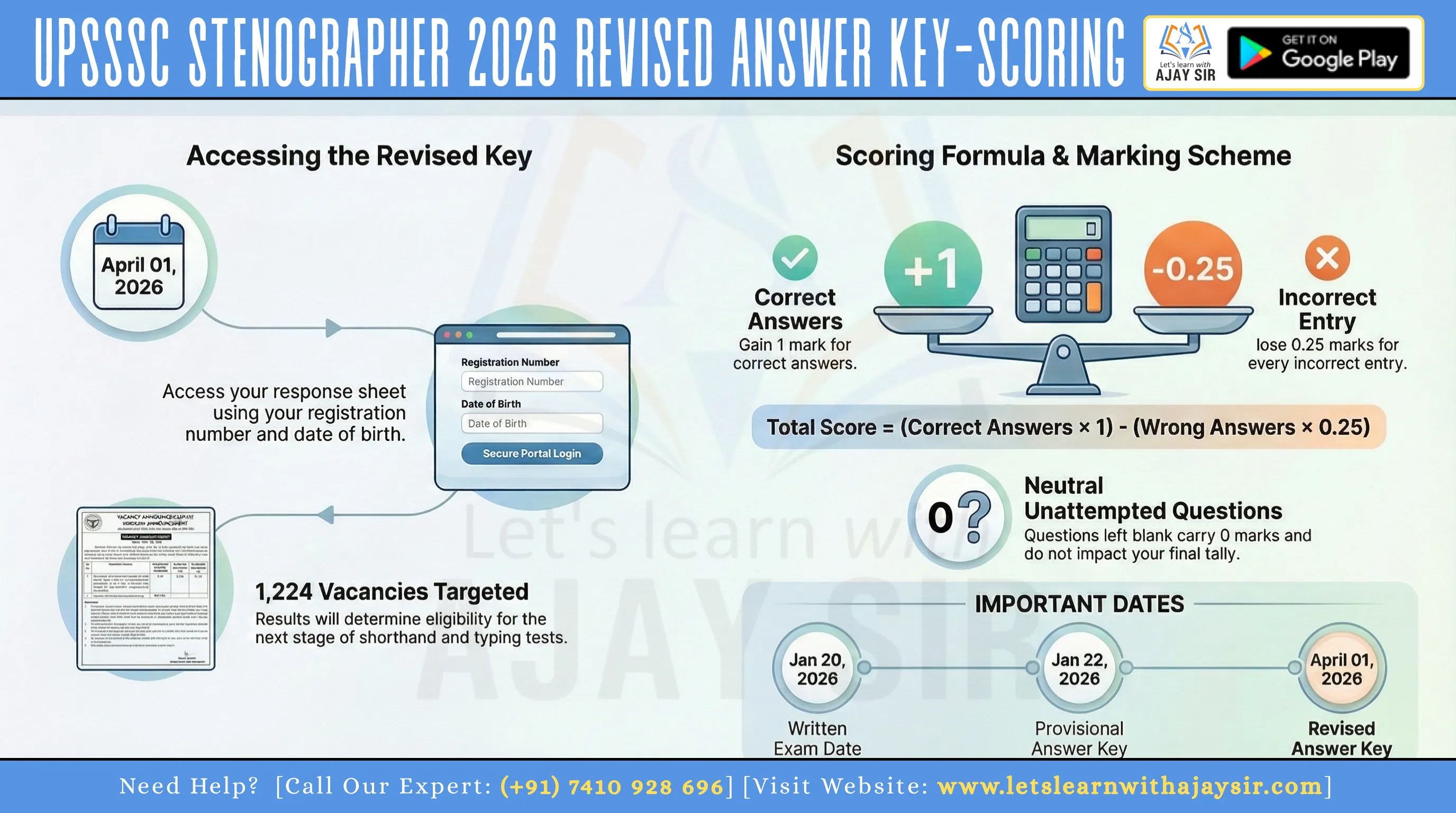
Know the basics: the selection uses computer-based tests (CBT) with MCQs, four options each, one mark per correct answer and 0.25 negative marking for wrong responses. Each paper runs for three hours.
All Details
The core sections cover General Awareness, Reasoning Ability, English, General Hindi, ICT, Quantitative Aptitude and post-wise topics. TGT/PGT also include a Language Competency component that can gate overall evaluation.
You will find official PDFs and notifications on the navodaya.gov.in recruitment section of the website. Use this guide to turn the syllabus into a practical study plan with pacing, mocks and revision loops that fit your schedule.
1. NVS Teaching and Non-Teaching Syllabus 2025: Overview
This recruitment gateway combines common aptitude sections with role-specific subject tests so you can plan a targeted study path.
You will find centralised computer-based tests that cover shared areas such as general awareness, reasoning, English, Hindi, ICT and role-linked subject knowledge. For posts like Principal, PGT and TGT, the paper layout changes, but the core pattern stays similar across the board.
The TGT and PGT papers include a six-part split with a qualifying Language Competency segment. There is a uniform negative mark of 0.25 for wrong answers, so accuracy matters more than blind attempts.
Scope: Papers span Navodaya Vidyalaya posts and selected administrative roles, so you can target the right subjects.
Strategy: Focus shared sections first, then role-specific topics and pedagogy where needed.
Updates: Official recruitment notices and the NVS syllabus PDFs are available on navodaya.gov.in — check them for recent affairs and changes across the years.
2. NVS Teaching and Non-Teaching Syllabus 2025: NVS exam pattern
You will face a computer-based test where careful time use matters as much as correct answers. The exam pattern uses MCQs with four options. Each correct answer gives 1 mark, while each wrong answer deducts 0.25 marks.
The test runs for three hours in a single session with no sectional time limits. For most posts, the total is 150 questions worth 150 marks, so pacing is vital to cover easy items first.
Computer-based format, total questions, marks and time
Both TGT and PGT papers have 150 objective questions. The Principal pattern totals 150 marks across five parts. Use self-imposed checkpoints to manage time and direction during the examination.
Marking scheme: one mark per question and 0.25 negative marking
The penalty for a wrong answer changes your attempt strategy. Skip low-confidence items on the first pass to protect your net marks. After completing safe attempts, return to tougher questions if time allows.
Language Competency Test in Part VI: qualifying nature and 40% minimum per language
Part VI is a qualifying competency test. For TGT, it covers English, Hindi and one regional language (19 options); for PGT, it includes English and Hindi. You must secure at least 40% in each language. Failure to meet this threshold means Parts I–V will not be evaluated.
Post | Questions | Marks | Time (hours) |
TGT / PGT | 150 | 150 | 3 |
Principal | — | 150 | 3 |
Part VI | Qualifying | Qualifying | — |
3. NVS Teaching and Non-Teaching Syllabus 2025: NVS TGT exam pattern and detailed syllabus
The TGT paper is arranged into six parts, each testing a distinct skill set and knowledge area. You must balance quick accuracy in short sections with deep preparation for the big subject block.
Section-wise split and focus
Parts I–IV are short (10 questions, 10 marks each). Part I covers general awareness — history, polity, economy, science & technology, sports and current affairs. Part II tests reasoning: analogies, coding-decoding, series and deduction.
Part III checks Knowledge of ICT — MS Office, internet basics, hardware/software, networking and ed-tech tools. Part IV assesses teaching aptitude: learner traits, methods, classroom aids, evaluation systems and NEP 2020.
Subject & language detail
Part V is the heavy block: 80 questions, 80 marks on graduation-level subject knowledge plus pedagogy and case-based items. This is where trained graduate depth matters most.
Part VI is qualifying: English, Hindi and one regional language (10 questions each). You must score 40% in each language to enable evaluation of Parts I–V.
Part | Questions | Marks |
Part I — General Awareness | 10 | 10 |
Part II — Reasoning Ability | 10 | 10 |
Part V — Subject & Pedagogy | 80 | 80 |
Use this outline to frame your plan. Practise the NVS TGT syllabus section-wise, focus daily on the subject block, and take mock tests to match the exam pattern. Candidates who balance speed and depth tend to score higher across parts.
4. NVS Teaching and Non-Teaching Syllabus 2025: NVS PGT exam pattern and detailed syllabus
For PGT candidates, the exam is divided into six clear sections with a heavy academic core. You face a 150-mark paper delivered in three hours with 0.25 marks deducted for each wrong answer.
Section-wise layout
Parts I–VI are: General Awareness (10 Qs, 10 marks), Reasoning (20 Qs, 20 marks), ICT (10 Qs, 10 marks), Teaching Aptitude (10 Qs, 10 marks), Subject & Pedagogy (80 Qs, 80 marks) and Language Competency (English 10 + Hindi 10, qualifying).
What to study in each short part
General Awareness: Important days, books & authors, five-year plans, budgets, organisations and current affairs.
Reasoning Ability: Series, spatial visualisation, arguments and conclusions — speed matters here.
Knowledge of ICT: Systems, networking basics, cybersecurity and how to integrate tech in class.
Teaching Aptitude: Critical and creative approaches plus case-based prompts that test classroom decisions.
Subject focus and language test
The 80-mark subject block assesses your core subject knowledge and how you apply it to pedagogy and classroom problems. The language competency test is qualifying; secure at least 40% in both English and Hindi to enable evaluation of the rest of the paper.
Part | Questions | Marks |
General Awareness | 10 | 10 |
Reasoning | 20 | 20 |
Subject & Pedagogy | 80 | 80 |
5. NVS Teaching and Non-Teaching Syllabus 2025: NVS Principal and Miscellaneous teaching posts
The Principal paper tests leadership, school systems and your operational judgement as much as raw facts.
Principal paper layout: Part I covers Reasoning & Numeric Ability (10 questions, 10 marks). Part II is General Awareness (20 questions, 20 marks). Part III is language (English 10 + Hindi 10 = 20 marks).
Parts IV and V form the core. Part IV examines academic and residential aspects (50 questions, 50 marks). Part V tests administration and finance (50 questions, 50 marks). The full paper is 150 marks, held over three hours with a 0.25 mark penalty for wrong answers.
How the TGT miscellaneous posts align
TGT Misc. follows the familiar TGT pattern: short objective blocks plus an 80-mark subject and pedagogy section. Language competency remains qualifying.
Focus on school finance basics and hostel management for Principal roles.
Practise numeric drills alongside scenario-based caselets.
Ring-fence time daily for Part IV/V topics if you apply across posts.
Track official recruitment notices to keep your studies current.
Post | Questions | Marks | Time |
Principal | 150 | 150 | 3 hours |
TGT Misc. | 150 | 150 | 3 hours |
Key focus | Leadership, subject depth | Academics, admin | Accuracy under time |
6. Language papers decoded: English, Hindi and regional language expectations
Part VI acts as a decisive checkpoint: you must clear basic language tests to unlock the rest of your paper. This section is qualifying for TGT posts, and for higher posts, it still controls evaluation.
What the test covers: For TGT, the languages are English, Hindi and one regional pick from 19 options. Each language is set at Class X level and requires at least 40% to pass.
English focus: core grammar (tenses, voice, subject–verb concord), vocabulary, comprehension, sentence rearrangement and error spotting. Short, daily drills will boost your proficiency.
Hindi focus: vocabulary, व्याकरण, मुहावरे, वचन and अपठित गद्यांश. Practice timed passages so you answer questions cleanly under exam pressure.
Treat Part VI as a gatekeeper: score 40% in each language to ensure Parts I–V are evaluated.
Pick a regional language you can revise to Class X level; this reduces avoidable slips.
Use bilingual flash cards and a short error log to raise awareness of recurring mistakes.
Follow the NVS TGT syllabus and the TGT syllabus notes for precise lists. Small, steady practice helps candidates secure the qualifying mark without stress.
7. NVS Teaching and Non-Teaching Syllabus 2025: Quantitative and numerical skills
Strong number sense is often the quickest way to add reliable marks in the objective paper. Focus first on the core topics that appear most often and build a steady routine.
Number System, Decimals & Fractions, Percentages, Profit & Loss, SI/CI.
Ratio & Proportion, Averages, Mixtures & Allegations, Problems on Ages.
Time-Speed-Distance, Time & Work, HCF & LCM, Simplification, Data Interpretation.
How to practise
Prioritise fundamentals: percentages, ratios and SI/CI form the bedrock for many DI and word problems. Build speed on simplification, HCF/LCM and averages to free up time for tougher sets.
Use sectional timers and a compact formula bank for quick revision. Practise DI sets from simple tables to mixed graphs. Keep a short mistake journal and fix gaps with targeted drills.
Study rhythm: weekday topic drills, weekend full-length quant mini-tests to build stamina. This approach helps your ability to switch between problem types and handle pressure in the NVS TGT-level exam.
8. NVS Teaching and Non-Teaching Syllabus 2025: Official PDFs and trusted links
The safest route is to fetch post-wise PDFs straight from the official recruitment pages. Start at the main website and work from the source to avoid outdated guides.
How to reach the files: go to navodaya.gov.in > Recruitment > Syllabus/Notifications. You will find post-wise documents for TGT, PGT, Principal and miscellaneous roles.
Download each PDF and save it with the date. The official outline confirms CBT mode, the marks split, negative marking (0.25), total time (3 hours) and the qualifying language rules for Part VI (English, Hindi and regional language options).
Bookmark the recruitment page as your primary reference for any corrigendum.
Replicate any section-wise table into your study plan to track topics and questions by weight.
Match third‑party notes to the official PDF before you trust them; deprioritise topics not listed.
Document | What it shows | Action |
TGT pdf | Pattern, Part VI rules | Save & checklist |
PGT pdf | Subject weightage, language pass marks | Map study time |
Principal / Misc. | Admin focus, exam table | Prioritise topics |
Conclusion
This final note pulls together the practical steps you need to convert the syllabus into a win‑ready routine.
Focus on high‑weight parts: anchor study on the 80‑mark subject block for TGT and PGT while cycling daily through general awareness, reasoning, ICT and language work. Treat the language competency as non‑negotiable; secure 40% in each language early in mocks so your main paper is evaluated.

Remember, the exam is MCQ‑based CBT for three hours with 0.25 negative marking. Use official Navodaya Vidyalaya Samiti PDFs to validate scope, pick trusted books and past papers, build a 12‑week plan, and improve proficiency by practising real questions under timed conditions.

![EMRS PGT [Tier-2] ENGLISH - 2025](https://letslearnwithajaysir.s3.ap-south-1.amazonaws.com/courses/FsnKxIFpiLxbRD418g6vo7AsLy0ge7IP7Iu2fsJY.webp)
![EMRS TGT [Tier-2] ENGLISH - 2025](https://letslearnwithajaysir.s3.ap-south-1.amazonaws.com/courses/BjLXVqVV1SeZKnhYjmPZpz2jQ7r02kS73pGGOLrL.webp)
![KVS/NVS PGT ENGLISH [Tier-2] - 2025](https://letslearnwithajaysir.s3.ap-south-1.amazonaws.com/courses/vqli598KWrKnm4txcsZh5qjMN9UMAX8LvFk9IiF0.webp)
![KVS/NVS TGT ENGLISH [Tier-2] - 2025](https://letslearnwithajaysir.s3.ap-south-1.amazonaws.com/courses/pxC2WhfYKuyaoGqvcTvhTBL2Y44o3TNA0z8NYRB5.webp)